
21 KiB
[D] The Star Wars Prequels
-
Author: u/TheUtilitaria *
-
URL: https://www.reddit.com/r/rational/comments/5fkx9w/d_the_star_wars_prequels/
-
Score: 28
-
Created: 2016-11-29T20:09:29
Post:
It's just occurred to me that the star wars prequels are what happens when you add a single level-1 intelligent character into a world of stock characters with no self-awareness. I'm talking about Palpatine - he's the only character with anything like a goal, while everyone else flails around doing whatever the plot requires and just reacting to his actions.
He's not that rational or that intelligent, his plans aren't much more complicated than lying and using very obvious manipulation, but that doesn't matter. He acts in a goal-directed way and just that is enough for him to run rings around the Jedi and the rest of the galaxy.
Comments:
u/DCarrier [+17] (6 hours later)
What about Darth Jar Jar?
u/None [+5] (a day later)
Taking you seriously for the moment: Even then you basically have the same problem, you just have 2 supernaturally competent sith not 1.
u/bambamramfan [+6] Cult of Azathoth (22 hours later)
For all the people who think Palpatine is the primary actor here, I am curious: what do you think would have happened if Palpatine was never born? Where do you think this universe would have gone?
u/sir_pirriplin [+12] (23 hours later)
Every single plot thread was initiated by Palpatine.
The Jedi Council was completely paralyzed because their pre-cognitive abilities were inhibited (Yoda said something about the Dark Side clouding their vision, which is probably due to Palpatine's own precog powers interfering).
Other actors were The Trade Federation, who it turns out were propped up by Palpatine, and Anakin Skywalker who would have remained a slave because the Jedi would have no reason to visit his planet.
So the Universe would mostly go nowhere, unless there was an outside threat between episodes 3 and 4 that The Emperor dealt with off-screen.
u/None [+8] (a day later)
(Yoda said something about the Dark Side clouding their vision, which is probably due to Palpatine's own precog powers interfering).
That would be an interesting way of reinterpretting the story, the Sith and jedi's actual main power is precognition, which is incredibly powerful against non force using enemies, but against eachother lead to a stalemate, (like in mistborn where because someone else is noticing your intentions changing the possibilities become fractal). So the whole war was actually Yoda and Palpatine playing precog chess.
Anakin Skywalker who would have remained a slave because the Jedi would have no reason to visit his planet.
If we buy that he was "the chosen one" and the force was guiding the jedi to him, then he would have likely encountered jedi in some other way without palpatine's presence. Though that leads to the question of whether "the chosen one" was created as a reaction to palpatine, or in fact directly by darth Plageus
u/sir_pirriplin [+7] (a day later)
Precognition is in fact the first power force-sensitives manifest. That's why the Skywalkers are good pilots.
Maybe Palpatine was manipulating events behind the scenes, including choosing which prophecies the Jedi Council had access to, so that they would train Anakin for him.
u/DuplexFields [+6] New Lunar Republic (3 days later)
I believe they were headed for war anyway.
The Republic was in decline, their government ineffective at crisis and management, even without the Trade Federation blockading Palpatine's home planet of Naboo. They had no galactic fighting force, which some could say was a good thing, relying on Jedi peacekeepers and probably system-level and region-level military forces. They had peace, but it turned out to be fragile, with many systems joining the civil war led by Count Dooku, a former Jedi who had formidable willpower and influence even without Darth Sidious' hand on his back. War is about control of resources and money, even when ideology and religion play a part.
As for the Skywalker line, Shmi may or may not have had children by natural means without Plageus and Sidious' life-manipulation mysticism. If she had, they may have been gifted in the Force, though not to the extent that Anakin was. The Jedi may even have picked her offspring as Jedi padawans.
There is no denying human nature, though. There were dark wizards before Voldemort, and there will be more after. The same is true of the Sith.
u/sir_pirriplin [+2] (3 days later)
Maybe they were going to war eventually in a few decades/centuries. But in the time of Star Wars they were so far from war that Palpatine had to prop up the Trade Federation, mentor Dooku, gather a bunch of allies, and then make an army for the Republic in secret so he wouldn't "win" right away.
u/Aretii [+8] Cultist of Cthugha (an hour later)
Just going to leave this here: http://prequelsredeemed.blogspot.com/2014/11/a-long-time-ago.html
u/DangerouslyUnstable [+26] (2 hours later)
I only read the first few posts but that seems like the type of horrible over-analysis that made me despise highschool lit classes. You can overthink your way into imagining that any particular piece of garbage has deeper levels and layers, but in reality, it's just garbage. I'm not one of the really bad haters of the prequals. I don't think they have the quality or cultural importance of the original trilogy, but they are still fun, effects driven blockbusters.
Trying to convince yourself that they are these deep social commentaries however is pretty wrong IMO. It can be a fun game to play (which I was forced to do during my high school exit exams) but doing so says more about the person playing the game than it does about the work being analyzed.
u/scruiser [+16] CYOA (2 hours later)
I agree that you can overthink anything and that often the core material really may just be flat garbage... but that is one of /r/rational's approaches isn't it? Analyze a work, find world-building flaws or inconsistencies, and the reconstruct them to make them make sense in-universe, and then tell a more rational story in the resulting universe. To that end, if you read the blog with a focus on posts where the author is constructing high quality fanon to harmonize the inconsistencies of the prequels, it is pretty solid /r/rational material, even though it is more literary type analysis than rational world building.
minor disclaimer: Just read a few posts, so not sure about all of it or which ones you read but from the initial sample I read it seems okay.
u/DangerouslyUnstable [+21] (2 hours later)
I wouldn't mind it as much if the tone was more "wouldn't it have been great if the prequels were doing this cool thing" instead of "this is what the prequels were saying and no one understood it and they are actually really great".
Taking something that is bad and changing it to make it better is totally /r/rational material, but back arguing as to why it was actually great in the first place (which is how the tone of those blogs came off to me) is not. None of the posts I read made of the case of "if this one thing had been slightly changed, the tone woudl have been better and it could have conveyed this cool idea". It was all "no one realized it at the time, but the dialogue actually implied this totally deep and layered message".
u/scruiser [+8] CYOA (3 hours later)
"this is what the prequels were saying and no one understood it and they are actually really great"
I assumed that this tone was because it was written with a death of the author type of mentality. From the blog's perspective, it doesn't matter what George Lucas or any other writer or actor originally intended.
In fact, reading some of the blog posts, it seems like unless George Lucas was aware of his privileged white male status and yet willing to portray privilege without addressing it, a lot of the social commentary this blog reads into the prequels in order to appreciate them is not something Lucas would have thought of.
From the post about Jedi mind tricks:
The “Jedi Mind Trick” is class intimidation. You be clever and confident at someone who has lower status than you, and your sheer willpower gets them to puppet your words. This is a thing in the real world.
This is a clever deconstruction of the Jedi Mind Trick as seen on screen. I am sure quotes from Lucas, the novelizations, and the Expanded Universe all contradict this interpretation, but again, death of the author means the critique can restrict itself to just the films. The blog post recognizes that Lucas may not be aware of this message.
What if he did not? This recurrence would then mean that when presented with the tool of casual mind control, the primary way he sees to use it is “confident white men convincing relative aliens to parrot their words.” Which would be a reflection of the world Lucas was in, after all.
So I think you are just misreading the literary analysis style.
"no one realized it at the time, but the dialogue actually implied this totally deep and layered message".
Well yeah, but if Lucas didn't consciously intend the deep and layered message, and the analysis radically diverges from the intended message of Lucas, then in fact I would argue that the real nature of the analysis is closer to 'sightly changing one thing' in order to tell a better story. It's just with literary analysis writing, you are supposed to pretend your one slight change is actually in the source material the entire time, even if the original author isn't aware of it.
u/DangerouslyUnstable [+17] (3 hours later)
It's exactly this kind of literary analysis that so annoys me. Like I said in my first post, that can be an interesting game to play, but it says almost nothing about the work itself and instead talks only about the person doing the analysis, so what work they are analyzing is really not important at all. This is obviously a personal opinion, and I won't try to claim that I am objectively right or anything, but that kind of analysis seems utterly pointless and a complete waste of time, both by the person performing it and the people reading it. Especially for such long and comprehensive works as a movie, let alont a movie trilogy. For something like a painting or a sculpture, I can concede the possibility that a work, regardless of the original intent of the creator, can come to represent a particular idea or ideology or something on it's own, and can do so in a cohesive, self contained way. But when you come to longer works like novels or movies that tell a complex story, trying to make themes and ideas that the author did not intend fit into the story in a broad, consistent way is a fool's errand. Sure, it is possible, as this blog author did, to take individual scenes or a few sets of scenes and string together some plausible social narrative. But, if you put those scenes and ideas into the broader context of the work, they simply don't make sense because they were not originally intended to have those meanings. To make these just-so stories work, you have to either ignore specific parts of the work that contridict your post-facto rationalization or else you have to make the ideas so broad that they can be made to fit nearly any story. I'm sure that anyone who was interested in the effort could string together parts of the prequal trilogies that can made to directly contradict every theme he talks about in his blog post.
In summary, the death of the author type analysis, especially when applied to larger, more complex artistic works, seems pointless to me and adds nothing to the original work, since you can turn nearly any large, complex work to mean anything you want with enough motivated reasoning.
u/Amonwilde [+8] (3 hours later)
So you're against all commentary on a literary work? That seems a little excessive. Some works just can't be read without approaching them critically. Read The Wasteland and try not to read anything into it. True, the blog linked above is pretty much just reading patterns in the clouds, but I wouldn't throw out the baby with the bath water.
u/DangerouslyUnstable [+16] (4 hours later)
Of course I'm not against all commentary on literary work, just the idea from "the author is dead" school of thought that no work has inherent literary meaning (or at least, that the intended meaning isn't the only one) and instead is free for any interpretation that a particular critic wants to give it. Lots of literary and artistic works have very deep and nuanced meanings that are completely worthy of analysis and critique, but I think that those are all intended by the author. I am, however, completely agaisnt the "reading patterns in the clouds" analysis as you put it.
u/earnestadmission [+3] Singular "they" user (19 hours later)
Have you read Fahrenheit451?
What is that story about?
u/DangerouslyUnstable [+2] (20 hours later)
I have, but honestly it was so long ago that other than a general memory of some of the most basic plot details, I don't recall.
u/earnestadmission [+3] Singular "they" user (20 hours later)
This is a book in which government sponsored "firemen" travel to citizens' houses and burn any books that are found. The author, Ray Bradbury, famously walked out of a seminar when students told him that his books are about censorship. (He disagrees.)
u/eaglejarl [+1] (a day later)
What does he say it is about?
u/earnestadmission [+4] Singular "they" user (a day later)
Bradbury, a man living in the creative and industrial center of reality TV and one-hour dramas, says it is, in fact, a story about how television destroys interest in reading literature.
“Television gives you the dates of Napoleon, but not who he was,” Bradbury says, summarizing TV’s content with a single word that he spits out as an epithet: “factoids.” He says this while sitting in a room dominated by a gigantic flat-panel television broadcasting the Fox News Channel, muted, factoids crawling across the bottom of the screen.
link: http://www.laweekly.com/news/ray-bradbury-fahrenheit-451-misinterpreted-2149125
I think that it is probably silly to tell an author what message he was trying to convey. But it is symmetrically silly to say to a reader that the implications of your writing are strictly those messages which were deliberately and consciously encoded at the time of writing.
For an interesting analysis of why literature critique sounds so samey (and hard to believe) you might check out this essay about essays. It is written by the guy who wrote the "hierarchy of disagreement" article that floats around online sometimes. Link: http://paulgraham.com/essay.html
u/Aretii [+2] Cultist of Cthugha (a day later)
Television killing printed media.
u/Amonwilde [+1] (6 days later)
That's a legitimate view, but remember that an author's intentions aren't always self-evident (and, in fact, rarely are) and that the author herself might not know her own intentions. In fact, author's statements about or analysis of their own work are notoriously unreliable, for a variety of reasons. (Take Goethe's stance on The Sorrows of Young Werther many years later or George Lucas's statements about the original Star Wars as two of many examples.)
There was a group of scholars in bibliography (the academic study of books as objects and also of the methods for reconstructing corrupted works) that emphasized authorial intentionality above all. They made special editions of works they called "eclectic editions" because they chose from every available copy or manuscript the parts of the text that they thought best represented the author's intention. These were often excellent editions, but they also tended to claim that bibliography was a science and that intentionality could be pinned down. They didn't acknowledge that these editions they created often said as much about themselves as they did about the author and they didn't acknowledge the place of the greater society in creating a literary work, that the author draws on many influences (conscious or unconscious), not just some well of genius. Eventually it was clear how unsupportable this approach was, and the reaction against it was something of a shame because of the actually really exemplary scholarship that this group did. https://en.wikipedia.org/wiki/Textual_criticism#Greg.E2.80.93Bowers.E2.80.93Tanselle
I didn't like Barthes' Death of the Author when I first read it, either, but he's really reacting against the tyranny of the author's reputation. With some authors, like Joyce, it's almost impossible to read the text without having your reading overly colored by the previous reception and his reputation. The immovability of these reputations is kind of a pain, some some (like Pierre Bayard) have suggested that it's almost pointless to read a text under these circumstances since the author's fixed position is so unmovable. Barthes pushes back against that in a mostly productive way, I think.
u/bambamramfan [+2] Cult of Azathoth (22 hours later)
But, if you put those scenes and ideas into the broader context of the work, they simply don't make sense because they were not originally intended to have those meanings.
What is the broader context?
To make these just-so stories work, you have to either ignore specific parts of the work that contridict your post-facto rationalization or else you have to make the ideas so broad that they can be made to fit nearly any story.
What specific parts have been ignored?
I'm sure that anyone who was interested in the effort could string together parts of the prequal trilogies that can made to directly contradict every theme he talks about in his blog post.
Cool! I'd like to see you do one of those.
In summary, the death of the author type analysis, especially when applied to larger, more complex artistic works, seems pointless to me and adds nothing to the original work, since you can turn nearly any large, complex work to mean anything you want with enough motivated reasoning.
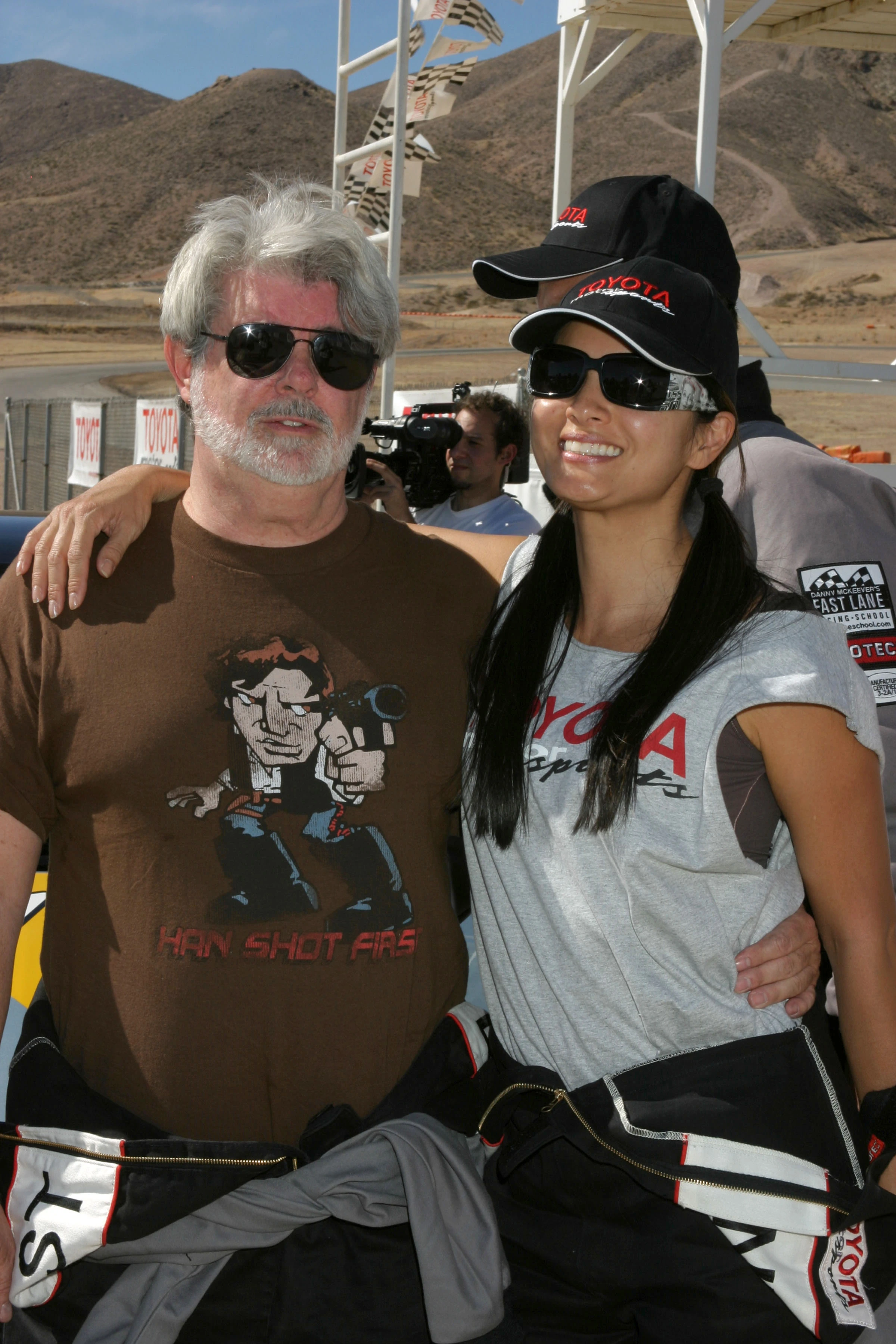
People keep throwing around "death of the author" a lot, even though Lucas is quoted several times. The problem is more that any other statement "by" the author (an interview, a speech before congress, a t shirt worn on set ) is itself a piece of art that has to be interpreted. You can probably arrive at a reasonable conclusion about what the author believes and what ideological world they live in - but only after doing the work of interpreting all their statements, including the piece of art they put 20 plus years in.
u/rhaps0dy4 [+3] (20 hours later)
doing so says more about the person playing the game than it does about the work being analyzed
Maybe. But reading those analysis was really enjoyable to me :)
Although when I watched the movie scenes linked in them, I didn't enjoy them (same as I don't enjoy Star Wars any more).
u/callmebrotherg [+11] now posting as /u/callmesalticidae (6 hours later)
This post seems relevant to any conversations that have already or may later ensue.
u/DangerouslyUnstable [+6] (20 hours later)
Thanks for linking that, it's a different take on literary criticism than I have heard before. I disagree on a few small things. He seems to think that there are only two types/purposes for criticism: understanding general story structure and criticism as a meta-artform. I think that there is a third use for literary criticims: understanding the themes and ideas of a specific story and how they fit in the social context of the time they were written. This is something that, like the TVTropes type, can be (IMO) factually correct, yet does not have any greater description for stories other than the one being described, and is not some kind of meta-artform. It's closer to art history really.
When it comes to the meta-art, author is dead type of criticism, I guess all I can say is that it is not for me. Which is fine. Lots of art isn't for me.